
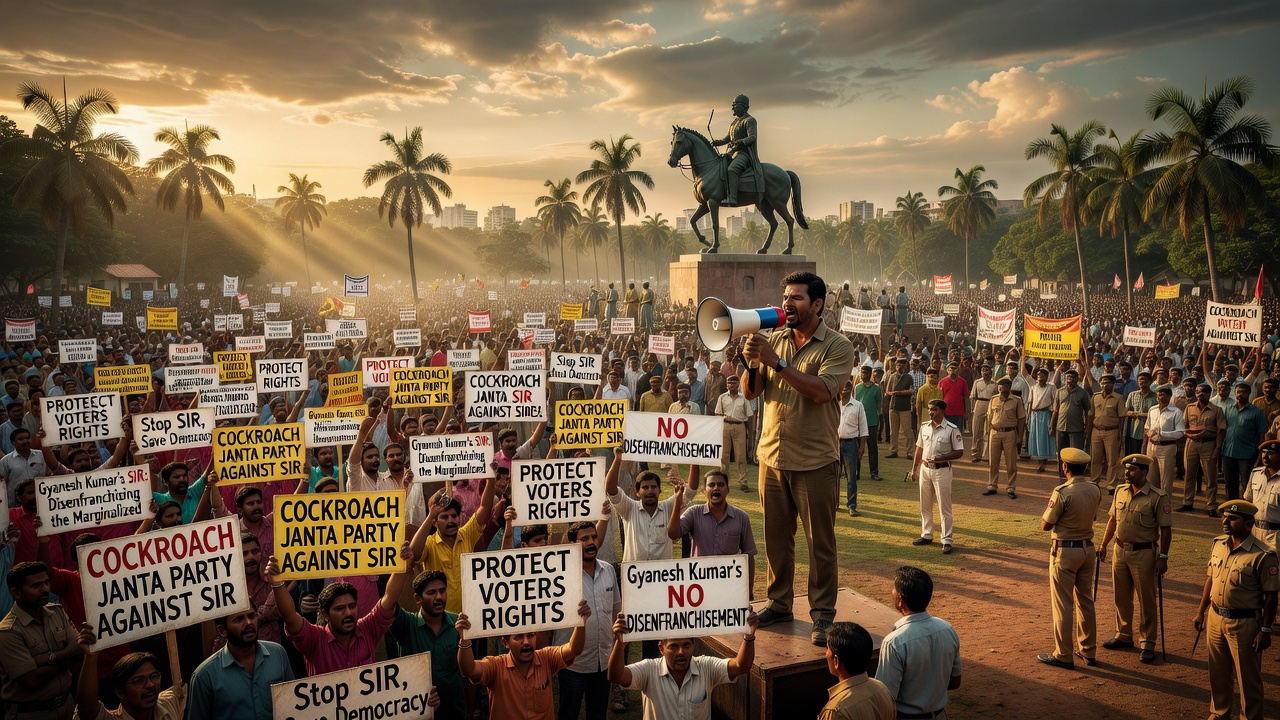
A fringe political outfit calling itself the Cockroach Janta Party has inserted itself into the growing standoff over the Election Commission's Special Intensive Revision process, with spokesperson Saurav Das describing a Mumbai demonstration at Shivaji Park as evidence of broad public backing. Speaking to India Today, Das said the ground was "full" and "overflowing with people," and outlined further protests planned in Karnataka, Uttar Pradesh and West Bengal before the party returns to Delhi.
What the SIR Dispute Is Actually About
The Special Intensive Revision, overseen by Chief Election Commissioner Gyanesh Kumar, is a process meant to verify and update electoral rolls - checking who is eligible to vote and removing entries that no longer belong on the list. Supporters frame it as routine housekeeping for the integrity of elections. Critics argue that large-scale revisions can inadvertently or deliberately strip legitimate voters from the rolls, particularly those without easy access to the paperwork needed to re-verify their status. That tension - between administrative tidiness and the risk of disenfranchisement - is the engine driving the street protests in Mumbai and Delhi.
A Small Party, A Loud Megaphone
The Cockroach Janta Party's name is itself a provocation, and its spokesperson's framing leans heavily on scale and spectacle rather than policy detail. Das's comments to India Today centered on turnout and symbolism - a packed Shivaji Park, a promised multi-state tour - rather than specific legal objections to the SIR methodology. That is a familiar pattern for smaller political formations seeking visibility: attach themselves to a live grievance, generate media coverage through theatrical branding, and use protest optics to claim relevance disproportionate to their formal electoral footing. It does not make the underlying grievance illegitimate, but it does mean readers should separate the party's self-description of its own impact from independently verified turnout figures, which were not detailed in the reporting.
Delhi's Detentions and the Commission's Response
The contrast between cities is notable. While Das described Mumbai's demonstration as organic and large, parallel protests in Delhi resulted in more than a thousand detentions - a sign that authorities in the capital took a markedly firmer line on unauthorized assembly or protest-venue restrictions. Das himself criticised limits placed on where demonstrations can be held, a complaint echoed by other civil liberties voices whenever protest permissions become a flashpoint. Meanwhile, the Election Commission's own response has been procedural rather than confrontational: it announced a special voter enrolment drive, an apparent attempt to address complaints about exclusion from the rolls without conceding that the SIR process itself is flawed.
Why This Matters Beyond the Protest Itself
Disputes over electoral roll revisions sit at the intersection of administrative procedure and democratic legitimacy. When a government body changes how voter lists are compiled, the practical stakes are immediate - millions of names, verified or purged, determine who can cast a ballot. The friction visible in Mumbai and Delhi, and the varying police response across states, signals that this is likely to remain a recurring flashpoint as the SIR rollout continues in other states. For now, the Cockroach Janta Party's claim of "strong public support" remains a political assertion rather than a documented fact, and readers following this story should watch for independent verification of turnout, enrolment outcomes, and how election authorities handle future demonstrations.