
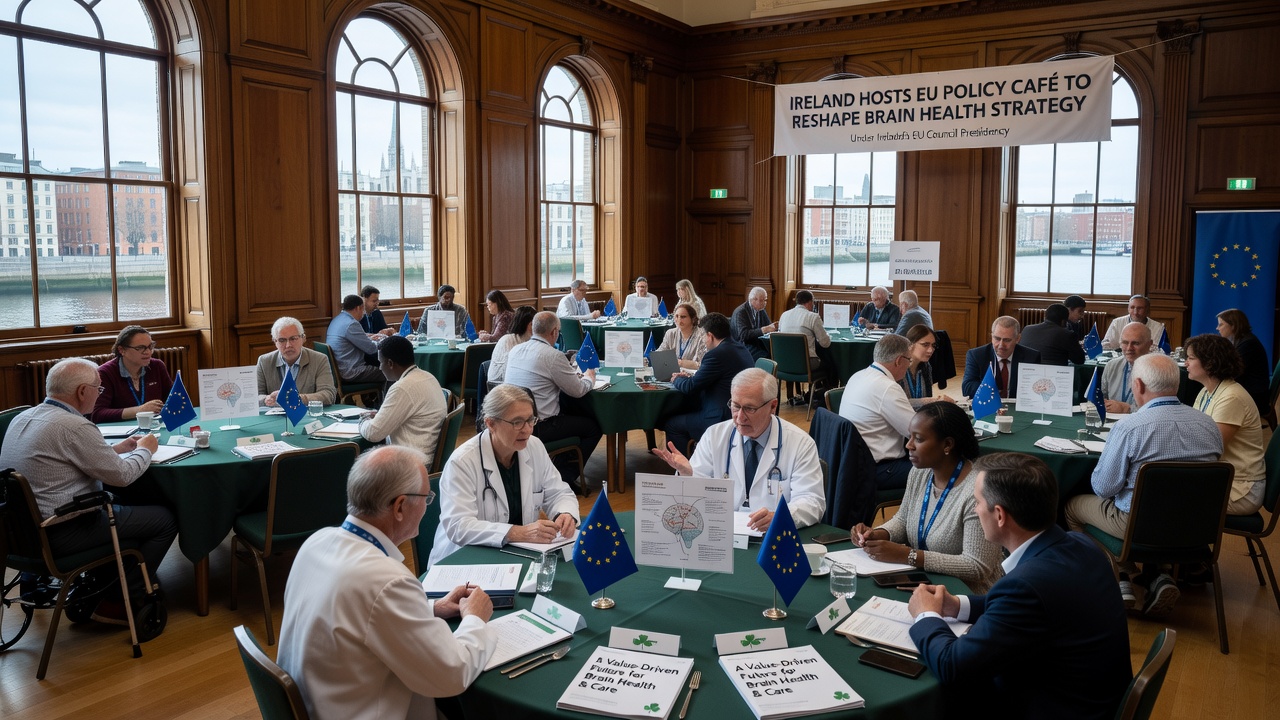
Brain health policy in Europe has long suffered from a familiar problem: the people living with neurological and mental health conditions are rarely in the room when decisions about their care are made. A Value-Driven Future for Brain Health & Care, an interactive Policy World Café, aims to correct that imbalance. Scheduled against the backdrop of Ireland's Presidency of the Council of the European Union, the event brings patients, carers, clinicians, researchers, regulators and industry representatives together at a single table to turn years of fragmented discussion into actionable recommendations.
Why a World Café Format Matters
The World Café model is deliberately different from the typical conference panel. Rather than experts speaking at an audience, small mixed groups rotate through structured conversations, each one tackling a specific challenge before findings are pooled and refined. For a topic as complex as brain health - spanning dementia, stroke, mental illness, neurodevelopmental conditions and rare neurological disorders - this format allows lived experience to sit on equal footing with clinical and scientific expertise. It is a format built for synthesis, not spectacle, and it reflects a broader shift in European health policymaking toward participatory design.
Four Challenges, One Policy Table
Organisers have structured the day around four facilitated themes, each chosen because it represents a persistent bottleneck in how brain health systems function across the continent.
- Lived experience - ensuring patient and carer insight shapes service design rather than being consulted after the fact.
- Prevention - addressing modifiable risk factors before conditions progress, reducing long-term system strain.
- Research-to-impact - closing the gap between scientific discovery and its translation into accessible care.
- Value-driven care - shifting resource allocation toward outcomes that matter to patients, not just activity measured in appointments or procedures.
Each group's output feeds directly into a closing policy dialogue, meaning the recommendations generated during the day are intended to inform real conversations among decision-makers rather than disappear into a conference report.
Why Timing and Setting Matter
Hosting this during Ireland's EU Council Presidency is not incidental. Presidency periods give member states a window to set thematic priorities and convene cross-border dialogue with elevated visibility. Brain health has gained traction as a European policy concern because neurological and mental health conditions place sustained pressure on health budgets, workforce capacity and social care systems as populations age. By building on momentum from recent national and European gatherings, this event positions Ireland as a convening ground rather than merely a host venue.
What Success Would Look Like
The ambition is coordination rather than duplication. Europe already has multiple brain health initiatives, research consortia and advocacy networks, but their outputs rarely connect into a single coherent policy direction. A people-centred approach - one that treats patients and carers as co-designers of the system rather than its end users - has the potential to improve continuity of care, strengthen resilience against future health-system shocks, and give funders and innovators clearer signals about where investment is genuinely needed. Whether the recommendations produced translate into lasting policy change will depend on what happens after the café concludes, when attention typically fades and implementation becomes the harder task.