
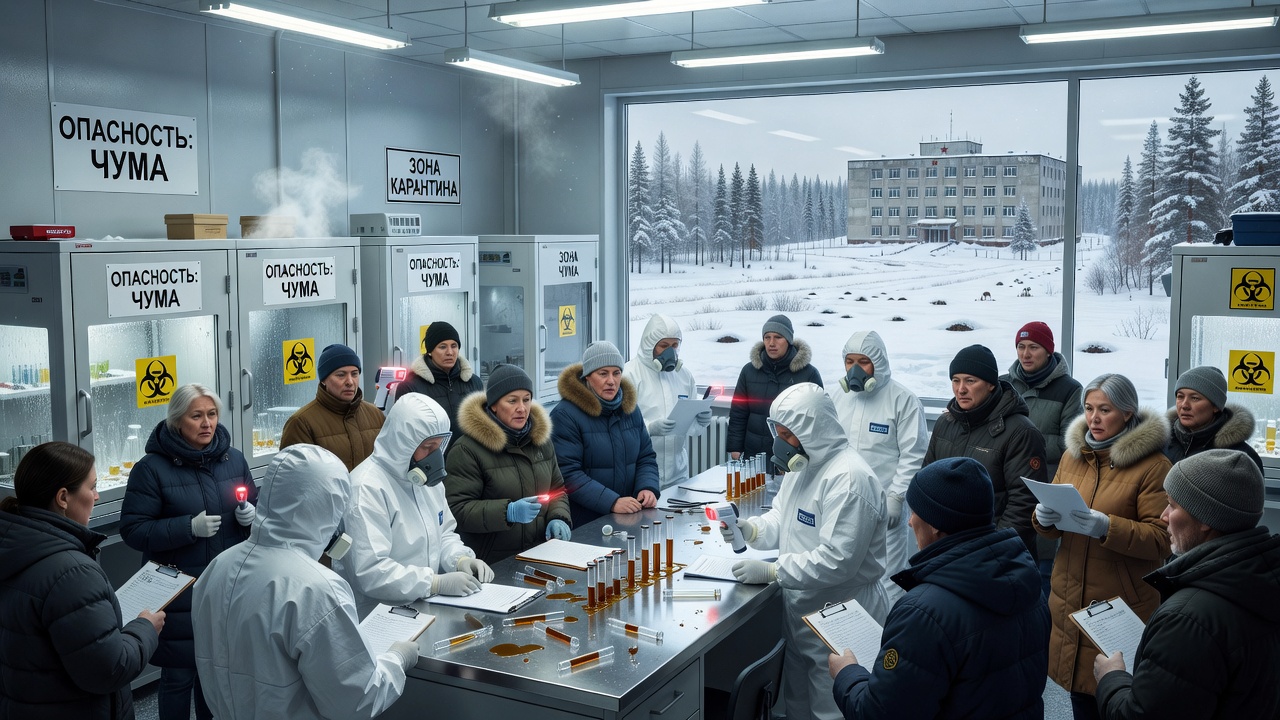
A death at a Russian research institute dedicated to studying plague and other dangerous pathogens has triggered a precautionary health response in eastern Siberia and drawn attention from officials in Washington. Nearly 200 people in the Irkutsk region are now under medical observation after an employee of the institute died following a severe pneumonia diagnosis. The circumstances remain unconfirmed by Russian authorities, but the episode has already raised questions about transparency, laboratory safety, and how quickly information travels across borders in an age of instant scrutiny.
What is known, and what is not
Local reports suggested the woman may have been exposed to the bacterium that causes plague after a test tube broke during laboratory work. She was hospitalised and later died. Russia's public health watchdog, however, has pushed back on that narrative, stating only that she was diagnosed with pneumonia of unknown origin and that laboratory testing found no microorganisms connected to her professional duties. That is a meaningful distinction. One version points to an occupational exposure at a facility built specifically to handle hazardous pathogens; the other points to an unexplained respiratory illness with no confirmed link to her workplace. Until Russian authorities release more detailed findings, the public is left with two competing accounts rather than a settled fact.
Why institutes like this exist
Russia maintains a network of so-called anti-plague institutes, a legacy system originally built to monitor and contain outbreaks of plague and other zoonotic diseases across the country's vast and ecologically varied territory. Siberia and parts of Central Asia still host natural reservoirs of plague bacteria in wild rodent populations, which is why specialised surveillance and research facilities continue to operate in the region. These institutes are not relics of a bygone era; they perform ongoing diagnostic and monitoring work precisely because the underlying biological risk has never fully disappeared. That context matters when assessing how seriously an incident involving one of these labs should be taken, regardless of how it is ultimately explained.
The logic behind mass monitoring
Placing close to 200 people under observation is a standard public health measure when any possibility of exposure to a dangerous pathogen exists, even before a diagnosis is confirmed. Health authorities would typically trace colleagues, medical staff, and close contacts of the deceased, then watch for early symptoms over an incubation period rather than wait for definitive laboratory confirmation. Officials have stated that none of those being monitored currently show signs of illness, which is a reassuring data point, though it does not resolve the underlying uncertainty about how the original case occurred. Precautionary surveillance of this scale is costly and disruptive, so its activation signals that authorities are not dismissing the possibility of exposure, even as they decline to confirm it publicly.
Why this reached Washington
A Trump administration official told Axios that the White House is aware of the reports and is monitoring the situation while "assessing options." That reaction reflects a broader shift in how governments treat biosecurity incidents since the pandemic years: even unconfirmed reports from research facilities handling dangerous pathogens now trigger rapid attention from foreign governments, intelligence services, and public health agencies abroad. The lack of official confirmation from Moscow does not reduce that interest; if anything, it heightens it, since ambiguity around a lab-linked death at a pathogen research facility is the kind of scenario international health security frameworks were designed to flag early, not after the fact.