
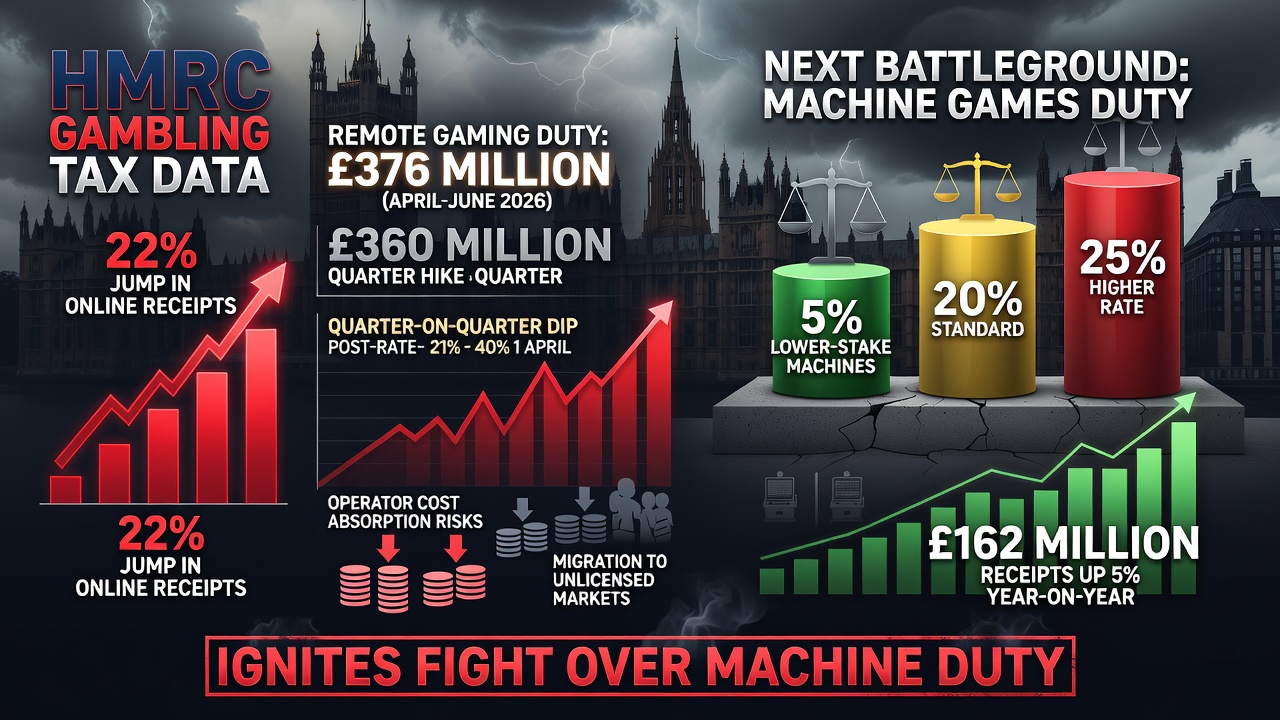
A 22% jump in online gambling tax receipts has handed the UK government early evidence that its overhaul of gambling taxation is generating more revenue - but the industry is warning that the real fight is still to come. Provisional HMRC figures show Remote Gaming Duty brought in £376 million between April and June 2026, following the rise in the tax rate on online gaming from 21% to 40% on 1 April. That is £67 million more than the same quarter a year earlier, yet it remains below the £360 million collected in the first three months of 2026, the last full quarter under the old rate.
What the numbers do and do not show
The quarter-on-quarter dip, despite the steep rate rise, illustrates exactly why single-quarter data should be read cautiously. A near-doubling of the tax rate did not translate into a near-doubling of receipts, which suggests some combination of operator cost absorption, changes in promotional spend, or shifts in consumer activity. Industry bodies have long argued that steep duty increases can erode the tax base over time, as operators adjust product offers, odds, or marketing budgets, and as some consumer activity migrates to unlicensed markets. HMRC's early figures do not settle that argument either way - they simply confirm that, in the short run, revenue rose. Whether that pattern holds once the new rate has been in place for a full year is the more important question, and one that will take several more quarters to answer.
Machine Games Duty becomes the next battleground
With Remote Gaming Duty now reset, attention has shifted to land-based gaming machines and whether Machine Games Duty will be the next target for reform. The current structure applies three rates depending on stake and prize levels:
- 5% for lower-stake, lower-prize machines
- 20% as the standard rate
- 25% as the higher rate
MGD receipts for the April-June quarter came in at roughly £162 million, up about 5% year-on-year and only marginally ahead of the £160 million recorded in the first quarter. No change to these rates has been confirmed by the Treasury, but speculation about a significant increase ahead of the next Budget has prompted the retail betting sector to mobilise early, rather than wait for an announcement.
Retail operators warn of shop closures and lost investment
The Betting and Gaming Council has launched its "Back Our Betting Shops" campaign specifically to push back against any MGD increase, arguing that shops operating on thin margins could become unviable if duty rises sharply. JenningsBet has suggested more than 100 of its own shops could be at risk under a higher rate - a figure from the operator itself rather than an independent audit, and one that illustrates industry concern rather than a confirmed outcome. The British Horseracing Authority has raised a related worry: fewer betting shops means less revenue flowing through the horserace betting levy and media rights arrangements that help fund the sport, with the BGC separately pointing to more than £200 million in planned casino sector investment for 2026/27 that it says could be partly withdrawn if certain MGD rates were doubled.
A wider tax reset still unfolding
This dispute sits inside a broader restructuring of UK gambling taxation. Alongside the RGD increase, Bingo Duty has been abolished, and from April 2027 a new 25% rate will apply to certain remote betting activity under General Betting Duty, with carve-outs including bets on UK horseracing. Each element shifts incentives differently across online and retail channels, and regulators, operators and sports bodies are all still calibrating their response. The HMRC figures offer a first data point, not a verdict - useful ammunition for both sides of the Budget debate, but far too early to draw firm conclusions about shop closures, investment flows or the long-term durability of tax receipts.