
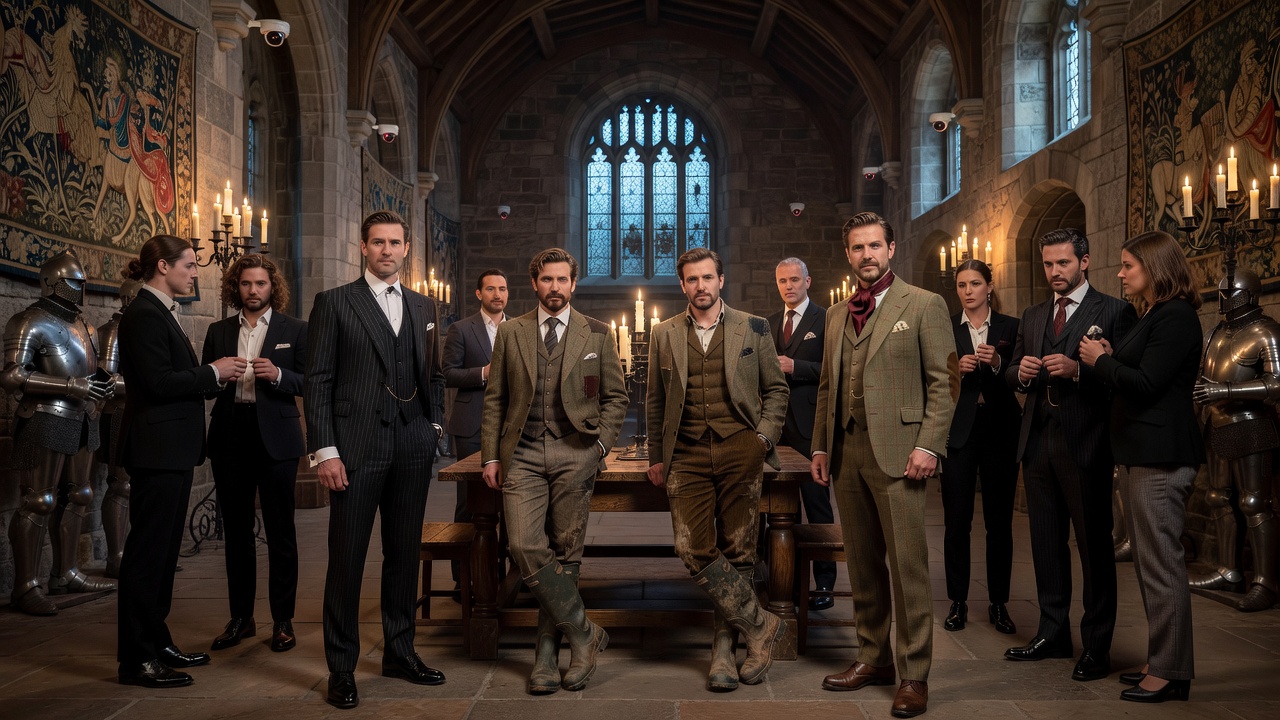
Autumn telly has a predictable rhythm: Bake Off returns, Strictly spins back into gear, and The Traitors reclaims its place as the format that rewards paranoia and performance in equal measure. The celebrity edition, now several episodes deep, has been a slower burn than some fans hoped for in terms of plot. What has filled the gap, intentionally or not, is costume - and it is worth taking seriously as a piece of television craft rather than dismissing it as filler commentary.
Styling as strategy, not accident
Reality formats built around sustained scrutiny - Traitors included - depend on contestants being watched constantly, by cameras and by each other. Clothing becomes a signal system. A guest who arrives in sharp tailoring is communicating control and readiness to perform; someone in battered countrywear is signalling ease, old money, or indifference to the cameras. None of this is incidental. Stylists working on high-profile entertainment shows coordinate wardrobe choices with production timelines, continuity needs, and the personal brand each celebrity is managing outside the show. For some cast members, that calculation is visible in every stitch; for others, the look reads as genuinely off-the-cuff, which is its own kind of choice.
Why audiences read so much into it
Viewers have become fluent in decoding image the way they once only decoded dialogue. A gilet and a pair of outdoor shoes can be interpreted as a deliberate softening of a public persona; a cravat and belted jacket can read as inherited ease rather than costume department effort. This kind of audience literacy isn't trivial - it shapes how contestants are perceived as trustworthy or suspicious long before a single vote is cast in the game itself. Shows like Traitors thrive on that ambiguity, and producers know wardrobe contributes to the psychological theatre as much as any boardroom-style elimination sequence.
The business behind the look
None of this happens by chance. Styling teams, PR representatives, and sometimes brand partnerships sit behind a celebrity's on-screen appearance across a season. For broadcasters, consistent and photogenic cast wardrobes support secondary revenue streams - press coverage, social clips, merchandising tie-ins - that extend a show's commercial life well past transmission. A single widely shared image of a cast member's outfit can generate coverage that a traditional advert never would, at a fraction of the cost. That's a quietly significant part of why formats like this invest real resources in how people look, not just what they say or do.
What it says about entertainment culture now
The fact that wardrobe can carry a season when plot momentum dips says something about how audiences consume long-running reality formats. Attention migrates to whatever detail offers the richest reading, and in a show built on deception and judgment, clothes are a convenient, low-stakes outlet for the same instincts the format is designed to provoke. It isn't a distraction from the show's purpose - it's an extension of it.