
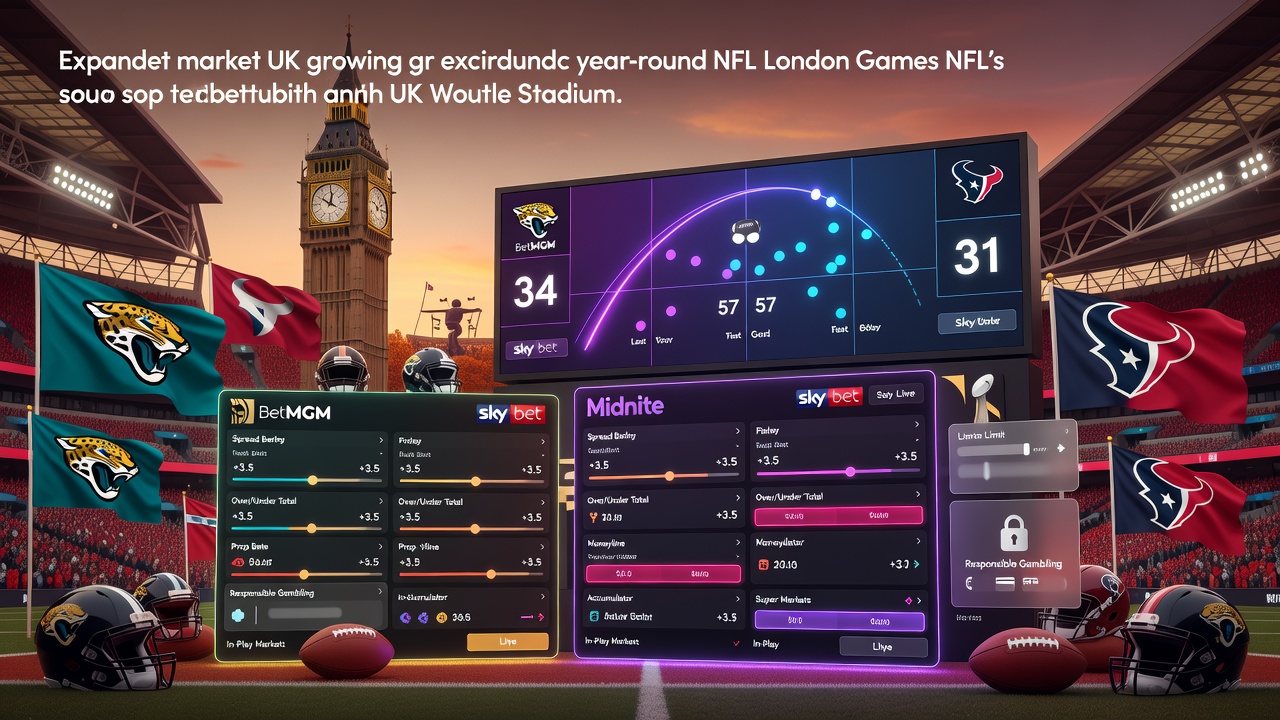
Three NFL regular-season fixtures now land on UK soil each autumn, and the effect on domestic sports betting has been hard to miss. This year's London double-header involving the Jacksonville Jaguars produced exactly the kind of drama that converts casual onlookers into regular viewers: two games decided by last-second field goals, one a Jaguars win sealed by a 57-yard kick after a frantic late return, the other a 34-31 shootout loss to the Houston Texans at Wembley. Moments like these are doing more to grow American Football's UK audience than any marketing campaign could.
Why UK bookmakers are investing in NFL coverage
Betting operators follow attention, and attention is shifting toward the NFL. Companies with roots in American sports betting, such as BetMGM, have brought their US-honed product directly to UK customers, while British-based platforms including Sky Bet have paired their broadcasting rights with sportsbook features built specifically around in-play American Football markets. Midnite's recent agreement to become an official betting partner of the league reflects a broader trend: operators are no longer treating the NFL as a niche November-to-February product but as a year-round acquisition channel, particularly among younger bettors drawn to its data-rich, prop-heavy betting style.
This matters for consumers because competition among operators tends to produce better pricing, more markets and improved technology - but it also means heavier marketing exposure around major fixtures, including the Super Bowl, when promotional activity typically intensifies.
Understanding the mechanics before placing a bet
American Football betting differs from markets many UK fans already know from football betting, which is why understanding the basic bet types matters before committing money.
- Spread betting handicaps the favourite, requiring them to win by a set margin rather than simply win outright.
- Totals (over/under) involve predicting combined points scored by both teams.
- Moneyline bets are straightforward wagers on the outright winner.
- Prop bets cover individual statistics - passing yards, touchdowns, specific player performances - and multiply sharply around the Super Bowl.
- Accumulators (parlays) combine multiple selections for higher potential returns but carry proportionally higher risk, since one failed leg voids the entire bet.
None of these formats changes the underlying mathematics: bookmakers price markets to retain a built-in margin, and no betting structure guarantees a favourable outcome over time.
What separates reputable platforms from the rest
Assessing an NFL-focused sportsbook involves more than comparing headline promotions. Market depth, particularly around marquee events like the Super Bowl, indicates how seriously an operator treats the sport. App performance matters too - NFL's stop-start, play-by-play nature punishes laggy in-play systems in a way continuous sports like football do not. Equally important are transparent terms on bonuses, a range of secure payment methods, and accessible, well-trained customer support.
Regulatory compliance underpins all of this. UK-licensed operators are required to display responsible gambling tools, age verification, and clear terms around promotional offers, which should always be read in full rather than assumed from advertising.
Keeping perspective as interest grows
The NFL's unpredictability - teams swinging from worst to first within a season - is part of its appeal, and the same volatility applies to betting outcomes. Promotional activity tends to spike around the Super Bowl, with operators offering enhanced odds, boosts and novelty markets tied to the broadcast itself. These can add entertainment value, but they do not alter the fundamental reality that sports betting carries financial risk and should be treated as a leisure activity with a fixed, affordable budget rather than a source of income.