
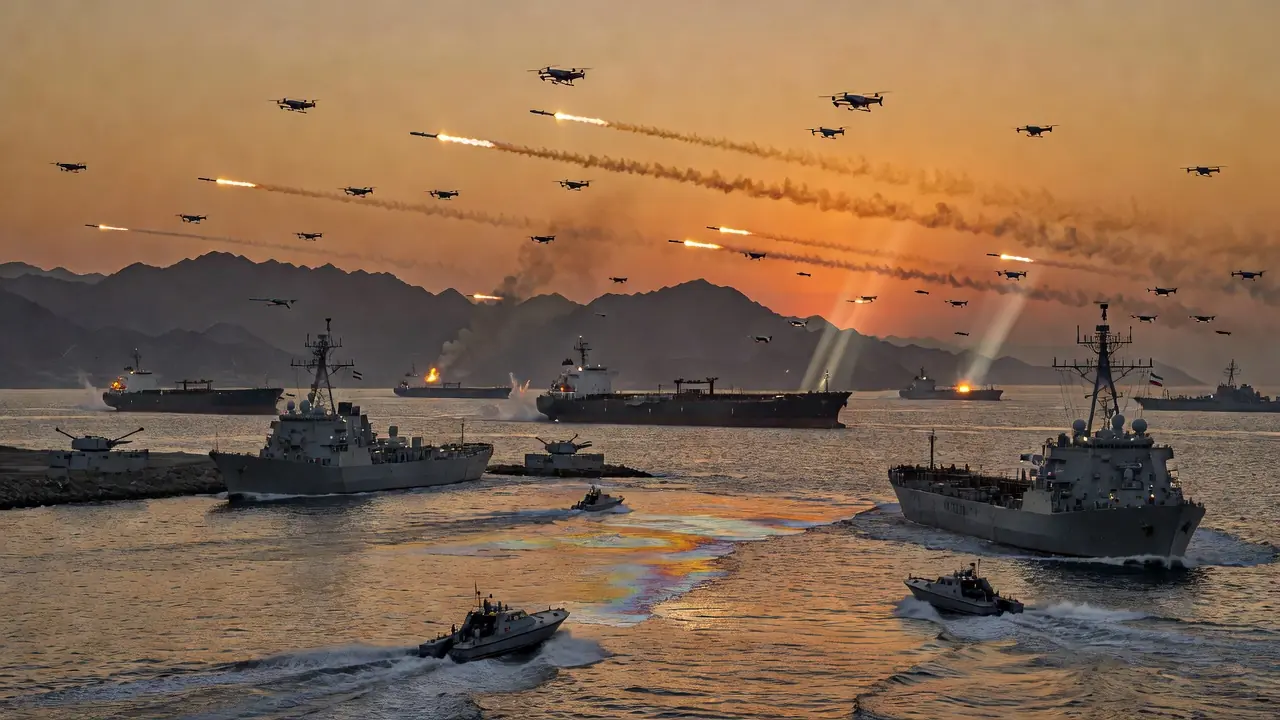
A confidential dataset cited by The New York Times points to a pattern that has largely stayed out of public view: dozens of drone and anti-ship missile attacks each week against commercial vessels transiting the Strait of Hormuz. The Islamic Revolutionary Guard Corps has now effectively acknowledged the operations, ending any pretense of ambiguity about who is responsible. The admission lands at a delicate moment, with U.S. naval forces escorting merchant ships through the strait while Washington avoids a direct military response.
Why the Strait Still Matters
The Strait of Hormuz remains one of the world's most consequential chokepoints for energy trade, a narrow passage separating Iran from the Arabian Peninsula through which a substantial share of global oil shipments must pass. Any disruption there reverberates through shipping insurance markets, freight rates, and energy prices well beyond the Gulf. That vulnerability is precisely why the strait has functioned for decades as a pressure point in Iran's confrontations with Western powers and their regional allies.
A Quiet Campaign, Acknowledged Late
What distinguishes this reported pattern from past flashpoints is its frequency and its low profile. Dozens of weekly strikes, if accurate, suggest a sustained campaign rather than isolated provocations. The IRGC's acknowledgment, even if indirect, shifts the narrative from deniable harassment to declared military activity, raising the stakes for how shipowners, insurers, and naval commanders calibrate risk in the region. For an attack pattern to persist at this scale without triggering open war suggests calculated restraint on both sides, a tense equilibrium rather than an absence of conflict.
Oil Exports Recover, but Risk Premiums Persist
Despite the reported hostility, oil exports from the region have shown resilience, a reminder that energy markets often adapt faster than security conditions improve. Shippers reroute, insurers adjust premiums, and buyers diversify sources, but none of that eliminates the underlying danger. Analysts tracking the strait continue to flag it as one of the most hazardous maritime corridors in the world, a status that insurance underwriters, commodity traders, and logistics firms must now price into their operations as a persistent baseline rather than a temporary spike.
What Comes Next for Shipping and Security
Washington's reluctance to retaliate directly reflects a broader calculation familiar from past Gulf tensions: escalation carries costs that can outweigh the immediate provocation, particularly when oil flows have not been severely interrupted. But restraint has limits. Continued strikes, even at a steady rather than escalating pace, erode the credibility of deterrence and could eventually force a shift in policy. For now, the pattern described by The New York Times points to a conflict managed just below the threshold of open war, with commercial shipping absorbing the risk in the meantime.