
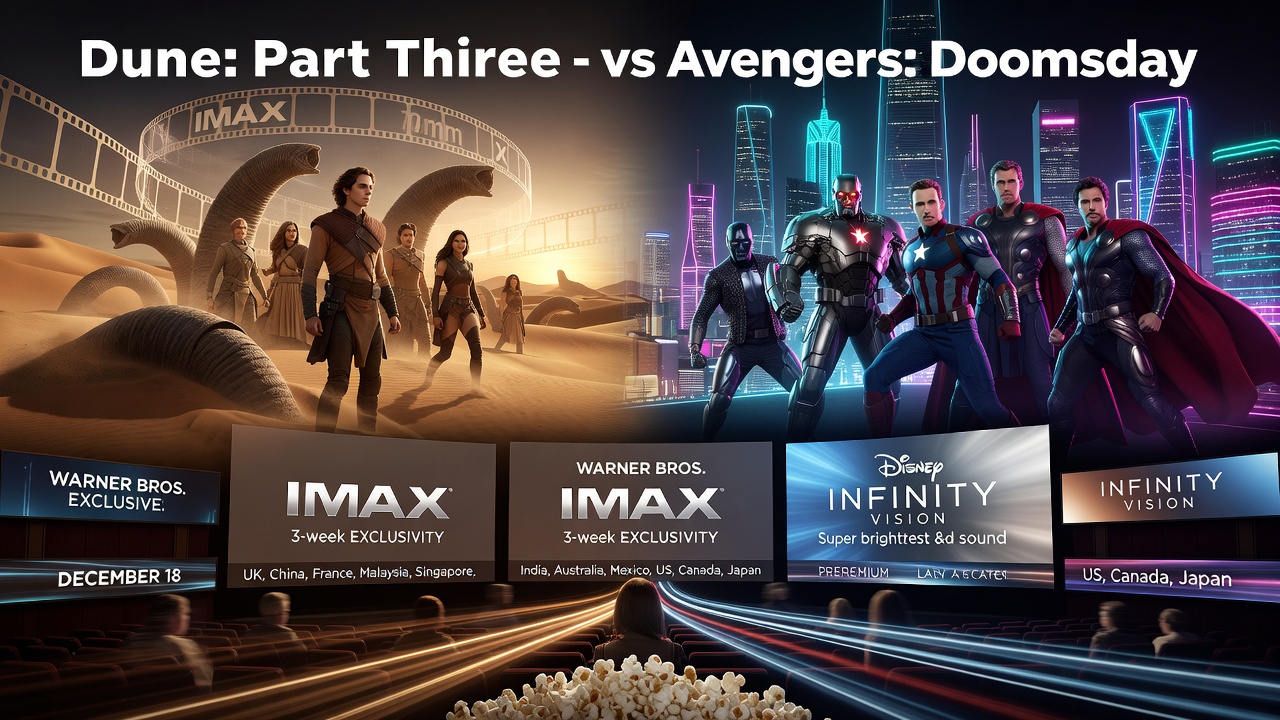
Two of the biggest franchise properties in modern cinema are now on a collision course for December 18, with roughly two months remaining before Warner Bros.' "Dune: Part Three" and Disney's "Avengers: Doomsday" open on the same day across multiple major markets. What began as a scheduling decision has turned into a test of how studios compete for premium screen access, audience attention and theatrical infrastructure during the industry's most valuable release window.
How the Date Collision Happened
The overlap traces back to June 2024, when Warner Bros. claimed December 18, 2026 for Denis Villeneuve's concluding chapter in the "Dune" saga, starring Timothée Chalamet, Zendaya, Robert Pattinson and Florence Pugh. Disney later shifted "Avengers: Doomsday," led by Robert Downey Jr. as Doctor Doom alongside Chris Evans, Chris Hemsworth and Pedro Pascal, from a May 2026 slot into direct competition on the same date. That decision transformed a single release day into what fans have labeled "Dunesday," turning a routine calendar adjustment into a case study in competitive release strategy.
Staggered Global Rollouts
Neither film is opening everywhere at once. "Avengers: Doomsday" is reportedly rolling out in phases: select markets including the UK, China, France, Malaysia and Singapore on December 16, followed by India, Australia and Mexico on December 17, with the US, Canada and Japan following on December 18. This kind of staggered international release is now standard practice for tentpole films, allowing studios to manage marketing spend, build word-of-mouth momentum and respond to regional holiday calendars rather than treating the release as a single global event.
The Fight Over Premium Formats
The more consequential battle may be happening off-screen, in the allocation of premium large-format theatres. Warner Bros. has reportedly secured exclusive IMAX access for "Dune: Part Three" during its first three weekends, a window that matters disproportionately for box office trajectory since early grosses shape a film's overall trend. The studio is also promoting IMAX 70mm presentations and more than an hour of expanded aspect ratio footage, positioning format quality as a selling point distinct from the film itself.
Locked out of IMAX screens during that critical stretch, Disney has responded by launching Infinity Vision, a new certification standard for premium large-format screens covering size, brightness and sound. The move illustrates how format branding has become a genuine competitive battleground in exhibition, not just a technical spec sheet. For audiences, it means two different premium viewing standards will be marketed in parallel, with consumers left to judge which delivers comparable quality.
Why This Matters Beyond Two Movies
This standoff reflects a broader shift in how entertainment companies compete: control over exhibition infrastructure, not just content, increasingly determines commercial outcomes. Exclusive format deals, staggered international calendars and proprietary screen certifications are becoming tools studios use to differentiate releases in a crowded marketplace where two films targeting the same date can each claim a distinct experience. How audiences respond to Infinity Vision as a credible alternative to IMAX, and whether the three-week exclusivity window meaningfully affects "Doomsday's" opening performance, will likely influence how future franchise rivalries are scheduled and marketed.