
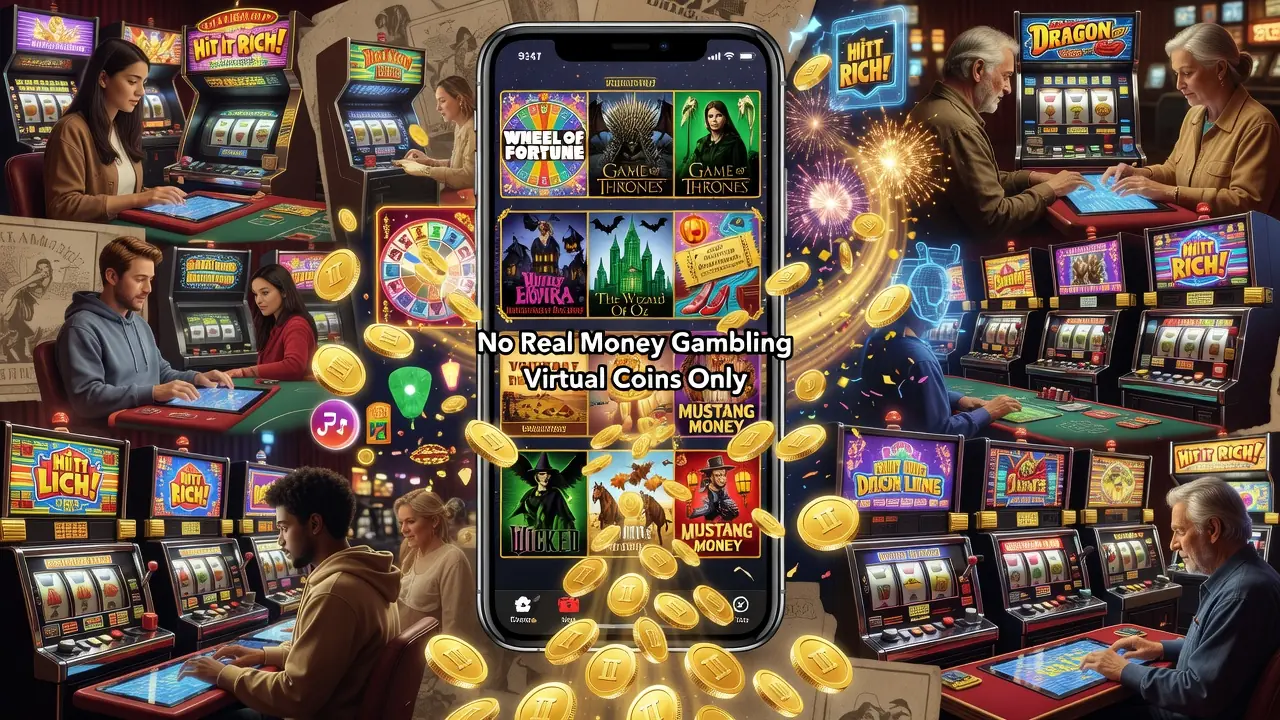
Hit It Rich! Casino Slots, Zynga's long-running social casino app, illustrates a business model that has quietly become one of the more durable corners of digital entertainment: slot-style games that mimic the look and feel of real casino floors without offering any chance to win actual money. The app bundles licensed entertainment brands - from Wheel of Fortune to Game of Thrones and The Wizard of Oz - into a single free-to-download product, relying on in-game purchases rather than wagering to generate revenue.
A Product Built on Licensing, Not Gambling
What distinguishes Hit It Rich! from a regulated online casino is structural, not cosmetic. The app explicitly states it does not offer real money gambling or any opportunity to win real prizes, and that success in the game carries no bearing on outcomes in actual wagering. This is the defining feature of the "social casino" category: players spend money to buy virtual coins and extend play, but they cannot cash out. That distinction keeps social casino apps outside the licensing regimes that govern betting operators and regulated online casinos in most jurisdictions, even though the games themselves - reels, paylines, bonus rounds - are visually indistinguishable from the real thing.
The licensing roster matters commercially. Pairing slot mechanics with recognizable franchises such as Willy Wonka & the Chocolate Factory, Elvira, and Wicked gives Zynga built-in audience recognition that a generic slot title would lack. It is the same logic that drives licensed merchandise and mobile games across entertainment: familiarity lowers the barrier to first engagement, even when the underlying product is a repetitive, chance-based mechanic.
How the Monetization Works
Free-to-play slot apps typically open with a large allotment of free virtual currency - in this case advertised as 10,000,000 coins - alongside daily bonuses and in-app bonus games designed to keep players returning. Once that initial balance depletes, the app offers additional coins for purchase. This "freemium" structure is standard across mobile gaming broadly, but it carries particular weight in social casino products because the gameplay loop - spinning, anticipating a match, chasing a jackpot animation - deliberately echoes the psychological rhythm of real-money slot machines.
- Revenue comes from optional coin purchases, not wagers, so there is no payout mechanism.
- Paid random items, such as bonus features tied to purchases, are subject to disclosed drop rates within the app, reflecting growing industry norms around loot-box-style transparency.
- Progress or "wins" in the app have no demonstrated connection to outcomes in licensed real-money gambling.
Why Regulators and Consumer Advocates Pay Attention
Social casino apps occupy a regulatory gray zone that has drawn scrutiny in several markets. Because no money can be withdrawn, most jurisdictions do not classify them as gambling products subject to licensing, age verification mandates, or wagering limits in the same way as regulated betting platforms. Yet the apps are built by the same design principles - variable reward schedules, near-miss effects, escalating bonus rounds - that underpin real-money slot machines. Consumer protection researchers have long flagged this overlap as a reason these products warrant honest labeling and clear purchase controls, even absent formal gambling regulation.
Zynga addresses some of this through disclosure: the app is marketed to an adult audience, purchase settings can be managed or disabled at the device level, and the company directs users to its terms of service and privacy policy. These are standard industry practices rather than regulatory requirements, underscoring that oversight of social casino spending currently rests largely on platform-level controls and company policy rather than dedicated gambling law.
The Broader Market Context
Hit It Rich!'s catalogue - spanning Zynga originals, licensed entertainment brands, and recreations of casino-floor staples like Mustang Money and Dragon Lines - reflects how social casino publishers diversify content to extend player lifespan within an app. The model has proven resilient because it sidesteps the licensing costs and regulatory burden of real-money gambling while still capturing spending from players drawn to the format. For consumers, the key distinction to keep in mind is simple: enjoyment or apparent skill in a social casino app says nothing about the odds, risks, or potential losses involved in actual gambling, where the house edge and real financial stakes are unavoidable realities.